Key Advantages of Elastopir®
- Effective fire protection
- Excellent mechanical and thermal properties
- Low lambda value
- High-performance insulation even with low material thickness

Performance Polymers
Elastopir® is BASF’s PIR (polyisocyanurate) rigid foam system for insulation applications requiring excellent thermal performance and fire protection, such as in industrial buildings, cold stores, and residential roofs, walls and floors.
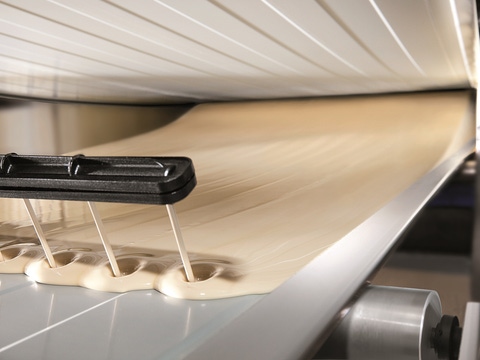
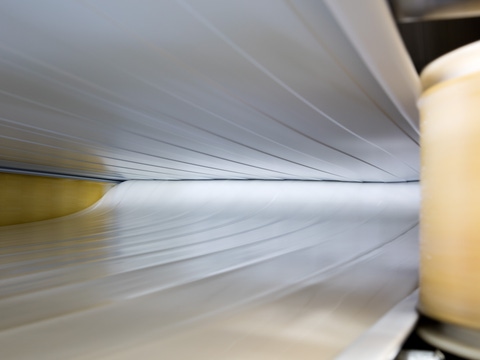
Elastopir® combines superb fire resistance with BASF’s patented rake technology, supporting the efficient production of high-performance PIR sandwich panels.
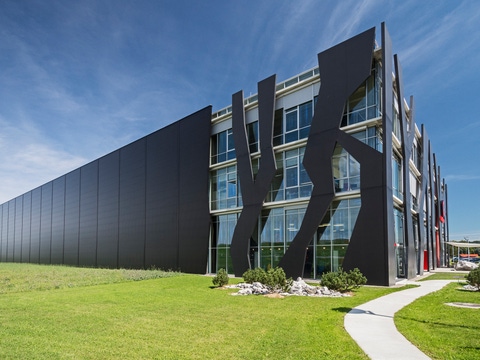
Elastopir® sandwich panels are used in industrial buildings, data centers, cold storage facilities, and residential applications where high thermal insulation and fire performance are required.
Buildings integrate sustainability and innovation through energy-efficient insulation systems, low-carbon materials, renewable feedstocks, and advanced polyurethane solutions that reduce environmental impact while improving performance.
Self-service solutions:
Q: What is Elastopir® used for?
Elastopir® is used in sandwich panels, insulation boards, cold-storage facilities, industrial buildings, and data centers.
Q: What are the benefits of Elastopir®?
Elastopir® combines excellent thermal insulation, mechanical strength, and enhanced fire performance in one solution.
Q: How does Elastopir® improve energy efficiency?
Its low thermal conductivity helps reduce heating and cooling energy demand, supporting more energy-efficient buildings.
Q: Can Elastopir® support sustainable construction?
Yes. Elastopir® helps lower operational energy consumption and is available with solutions that support reduced carbon footprints.
Q: Why choose Elastopir®?
Elastopir® helps create highly energy-efficient buildings thanks to its outstanding insulation performance, reliable fire behavior, and long-lasting durability.
Q: What is a PIR insulation system?
A PIR (polyisocyanurate) insulation system is a polyurethane-based rigid foam system used to produce highly efficient insulation materials for buildings, cold storage facilities, and industrial applications.
Q: Why do manufacturers use PIR insulation systems?
PIR systems combine excellent thermal insulation, mechanical performance, and enhanced fire behavior, enabling thinner and more energy-efficient insulation solutions.


