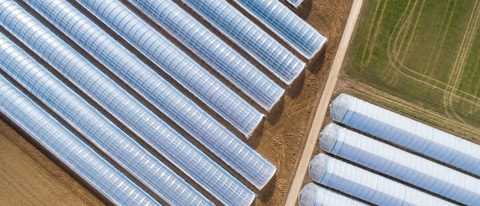
Abstract agricultural area - early vegetable cultivation, aerial view

Plastics & Rubber

Plastic Additives for Agriculture

According to United Nations estimates, the world’s population will exceed nine billion people by 2050. The use of durable, reinforced and functional plastics in agriculture, often referred to as “plasticulture”, is a secure way of increasing output and enhancing crop quality in a challenging environment due to climate change.

Currently, more than 7,000,000 metric tons of film is produced every year for the plasticulture market, with an average annual growth rate of about 7%. Greenhouse covers, mulch films and silage films (stretch, bag, sheet) are the main applications, accounting for more than 75% of the total agricultural plastic market. Asia-Pacific covers 70% of the global demand, followed by Europe.

The wide range of plasticulture applications also include walking and small tunnel films, disinfection films, floating covers, in addition to drip irrigation pipes, nets (ventilation, shading), nonwoven fabrics, twines, clips and substrate bags.

The plasticulture market must continuously adapt to feed the planet

Agricultural plastics are strongly influenced by four main trends that are shaping the market and driving innovation which will consequently have an important effect on the choice of films and their stabilization systems.

Improving production efficiency

The rising price of energy and growing scarcity of raw materials, including seeds and fertilizers, are making it necessary for growers to adapt agricultural practices to be more efficient. Agricultural plastics with extended durability and improved optical properties contribute to improving efficiency.

Higher UV radiation and heat

Light and heat stability are key requirements for plastics in agricultural applications. Increased UV radiation and heat due to climate change may result in rapid and dramatic loss of physical, mechanical and optical properties of the polyethylene or ethylene copolymers that agricultural plastics are mostly made of. BASF’s wide range of light stabilizers protect agricultural plastics during their service life against photo and thermal oxidation.

Increasing yield with fewer resources

The growing world population and continuous depletion of raw materials require more productivity with fewer resources available due to water scarcity and shrinking arable land due to climate change. Agricultural plastics play an important role in helping to enhance crop productivity and quality in such an environment.

Adopting responsible agricultural practices

Increasingly stringent regulations require the adoption of more responsible agricultural practices to protect crops against the occurrence and spread of diseases. New approaches, such as organic, biologic and ecologic production and integrated pest management (IPM), involve high levels of agrochemicals, including elemental sulfur (burnt, powder or wet table).

It is necessary to stabilize and to protect agricultural plastics against polymer degradation and interaction of contaminants with light stabilizers which must resist severe levels of agrochemicals. The same films must also be resistant to new practices regarding greenhouse structure, tools and soil disinfection which involve higher levels of chlorine.

Are you interested in how BASF’s NOR® technology helps farmers cultivating under organic-certified production system to grow safely and profitably in their social, ecological and economical sustainable agroecosystems.