Performance Polymers

Hyundai-Kia x Alten Korea x BASF

EV3 Study Car 2: Reimagining Automotive Seating with Circular Materials and Design for Easy Disassembly 

Hyundai Motor Company-Kia x Alten Korea x BASF

Kia EV3 Study Car 2.0: Reimagining Automotive Seating with Circular Materials Solutions and Design for Easy Disassembly Principles

Press Release: Hyundai Motor Company-Kia, Alten Korea and BASF co-create concept car seat in Kia’s new EV3 Study Car 2.0

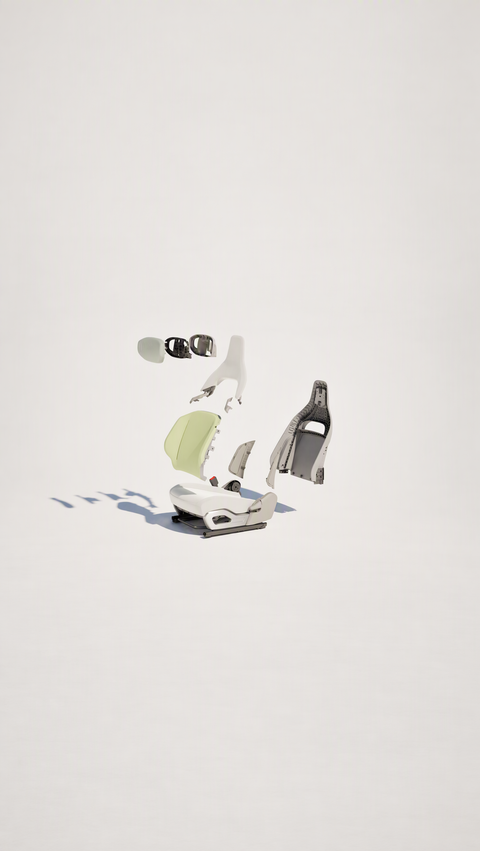
Building on the success of the 2024 Kia EV3 Study Car project, Hyundai Motor Company-Kia and BASF, together with engineering services company - Alten Korea, collaborated in designing an innovative seating solution for the Kia EV3 Study Car 2.0. The concept car seat demonstrates how circular material solutions, design-for-disassembly principles and end-of-life considerations could be incorporated into automotive interiors design to support a more circular mobility ecosystem.

Through four BASF material solutions, Elastollan® TPU, Haptex® polyurethane synthetic leather, Ultramid® CR RC4 polyamide and Elastoflex® W flexible polyurethane foam, the co-creation highlights how comfort, performance, and circular approaches can be seamlessly integrated into next-generation vehicle interiors.

Open lightbox

FAQ

How does the Kia EV3 Study Car 2.0 explore circular design for automotive seating?

The concept seat in the Kia EV3 Study Car 2.0 explores how circular material approaches, design-for-disassembly principles and end-of-life considerations can be incorporated into automotive interior design. Co-developed by Hyundai Motor Company-Kia, Alten Korea and BASF, the concept seat considers material selection, component construction and assembly methods to support easier dismantling and material separation at the vehicle’s end of life. 

What is design for disassembly, and how is it applied to the Kia EV3 Study Car 2.0 concept seat?

Design for disassembly considers how a product can be dismantled and its materials separated at the end of its useful life. For the Kia EV3 Study Car 2.0 concept seat, Hyundai Motor Company-Kia, Alten Korea and BASF explored how material selection, component construction and assembly can facilitate future dismantling and material sorting while meeting the requirements of an integrated automotive seat system.

What materials does BASF provide for the concept seat in the Kia EV3 Study Car 2.0?

BASF materials considered across the concept seat include Elastollan® thermoplastic polyurethane (TPU) for the headrest, Elastoflex® W flexible polyurethane (PU) foam for the seat cushion and backrest, Haptex® polyurethane synthetic leather for the upholstery, and Ultramid® CR RC4 polyamide for the lightweight seat back cover/seat back frame. These materials solutions incorporate approaches such as bio-based or bio-circular feedstocks and recycled content from post-consumer sources. 

How are Hyundai Motor Company-Kia, Alten Korea and BASF collaborating on the Kia EV3 Study Car 2.0?

Hyundai Motor Company-Kia, Alten Korea and BASF combined expertise in vehicle development, engineering, product design and advanced materials to develop the concept seat. Alten Korea translated the partners’ material and disassembly objectives into an integrated seat architecture, while BASF contributed expertise and material solutions spanning engineering plastics, PU and TPU. The collaboration uses the concept seat to examine how material decisions and component design can support end-of-life dismantling and separation.

Why is circularity important in automotive seat design?

Circularity is increasingly considered in automotive design because vehicle components eventually reach the end of their useful life. The Kia EV3 Study Car 2.0 concept seat explores how material selection, assembly approaches and future dismantling requirements can be considered during development to support material separation and resource efficiency at end of life.

What role do BASF materials play in the Kia EV3 Study Car 2.0 concept seat?

BASF material solutions are incorporated across the concept seat's cushioning, upholstery and structural components. By integrating material classes such as polyamide (PA), polyurethane (PU) and thermoplastic polyurethane (TPU), the project explores how materials can contribute to seat functionality while supporting the study's objectives around material selection, component design and end-of-life material separation.

What is the Kia EV3 Study Car 2.0?